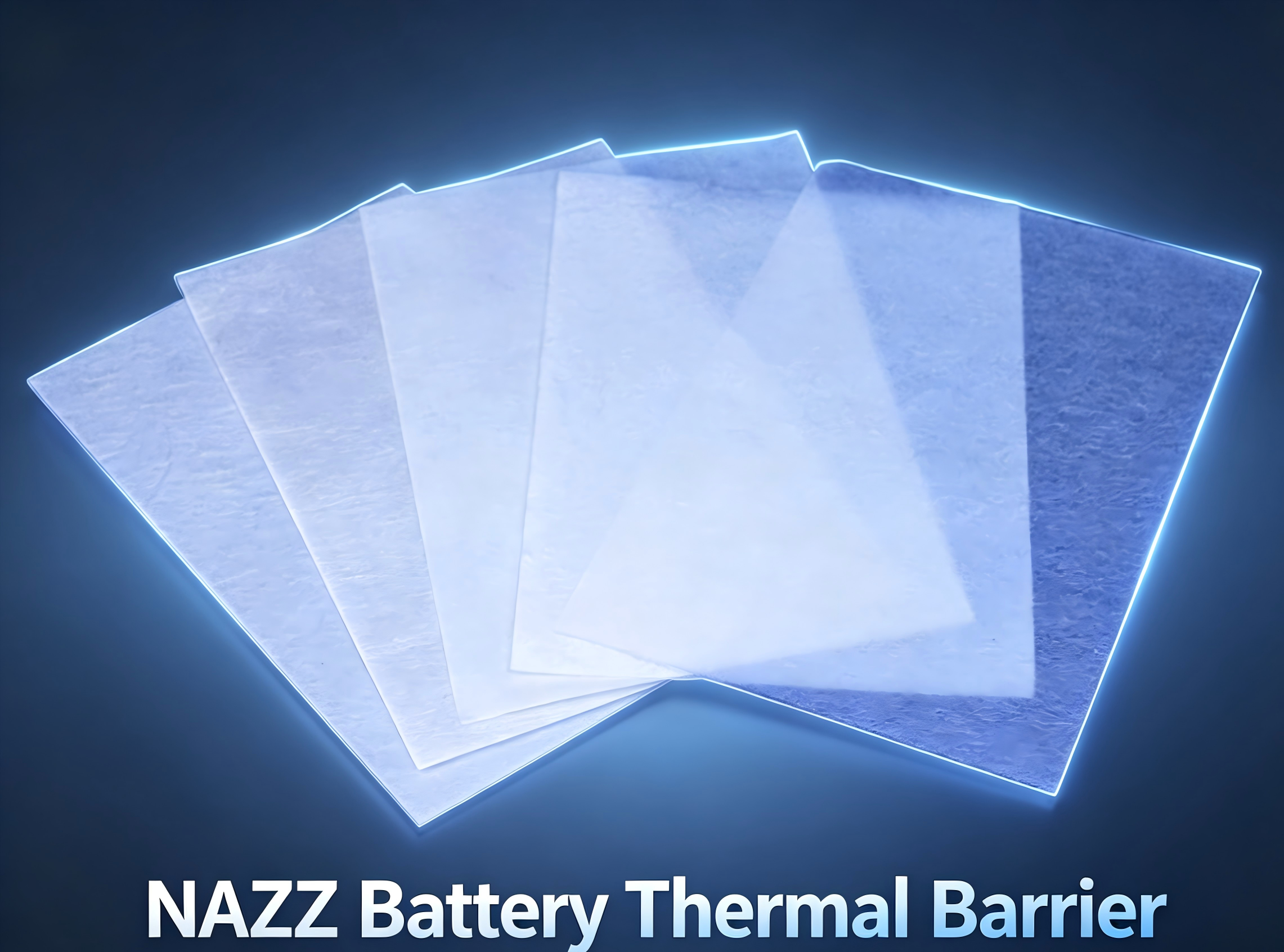
Regulation in this area has moved from advisory to mandatory in most major markets. The requirement is broadly consistent in intent even where the detail differs: a single cell failing must not cascade into a pack-level event without adequate warning time for occupants to get out, or for a site to be made safe.
That turns thermal barriers from an optional safety feature into a design constraint that has to be satisfied inside an energy density budget. Every millimetre of barrier is a millimetre not available for active material, which is why barrier thickness is argued over so hard in pack design reviews.
Where aerogel changes the outcome
- Meaningful propagation delay at a thickness that does not wreck the energy density target
- Doubles as a compression pad, so it is not pure overhead in the stack-up
- Withstands direct flame and ejecta from a venting cell
- Electrically insulating, so it does not create a new fault path
- Die-cut to cell geometry including tab reliefs and locating features
Typical scope
- Prismatic and pouch cell-to-cell barriers
- Module-to-module and module-to-lid barriers
- Pack lid and floor thermal shielding
- Busbar and connector isolation
- Container and cabinet BESS enclosure lining
- Battery abuse test rigs and containment
Products for this sector
- Thermal Barrier BT-EV - cell and module level for vehicles
- Thermal Barrier BT-ESS - module and rack level for stationary storage
Talk to us about your project
Send us your line list, drawings or target U-values and we will come back with a thickness recommendation, a bill of material and a quotation. Contact our technical team.
