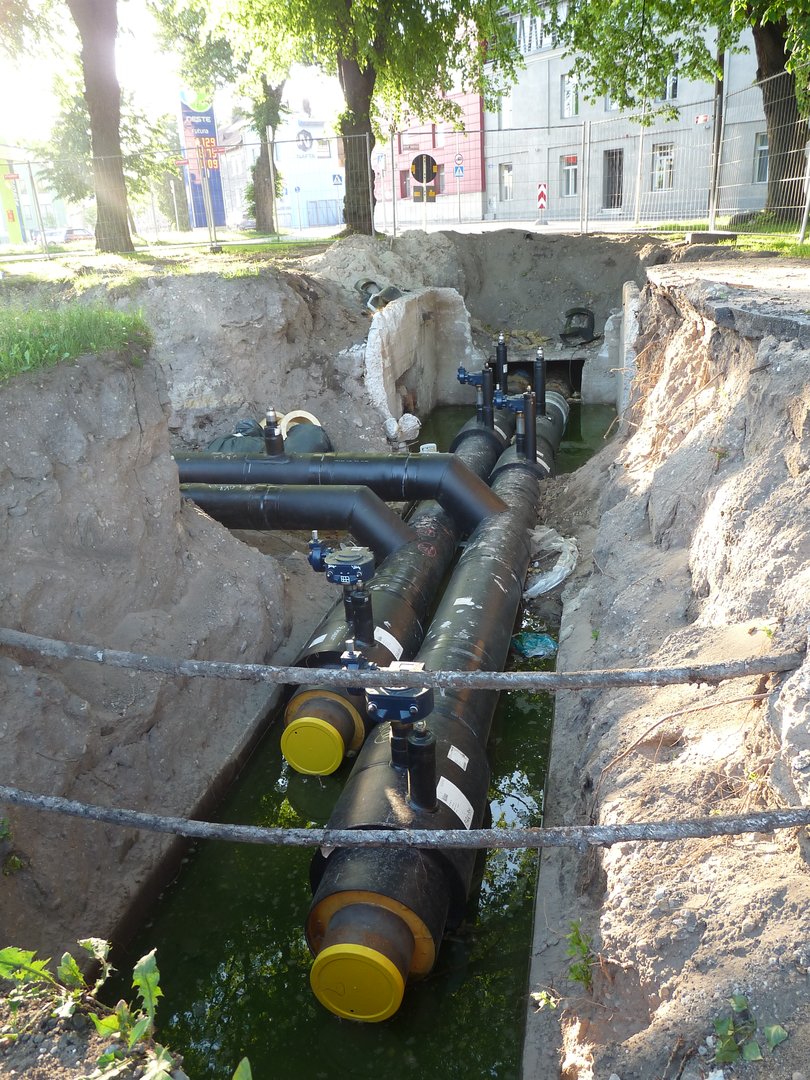
A district energy network is an unusual insulation problem because the asset is long, mostly buried or overhead, and hard to reach once commissioned. Losses that would be trivial on a single vessel become significant when multiplied by kilometres of pipework, and they are paid for continuously across the life of the network. Meanwhile the cost of going back to fix a defective section is dominated by excavation and disruption, not by the insulation itself.
That economic shape argues for spending more on the material and less on the number of interventions. It also argues for materials that fail gracefully: a section that gets wet should degrade locally rather than wicking water along the run.
Where aerogel changes the outcome
- Lower losses per metre, compounded across the whole network life
- Hydrophobic, so an ingress point stays local instead of travelling along the pipe
- Smaller outer diameter, which can reduce trench width and therefore excavation cost
- Faster installation on long repetitive runs, particularly with pre-formed sections
- Fits inside existing casings when an ageing network is refurbished rather than replaced
Typical scope
- Buried and above-ground steam distribution mains
- Hot water and chilled water distribution
- Condensate return lines
- Campus and hospital energy networks
- Plant room headers and manifolds
- Valve pits and chamber pipework
Products for this sector
- Pipe Section PS-Hot - the usual choice for long straight runs
- Aerogel Blanket AB-650 - valves, fittings and irregular geometry
- Pipe Section PS-Cold - chilled water distribution
Talk to us about your project
Send us your line list, drawings or target U-values and we will come back with a thickness recommendation, a bill of material and a quotation. Contact our technical team.