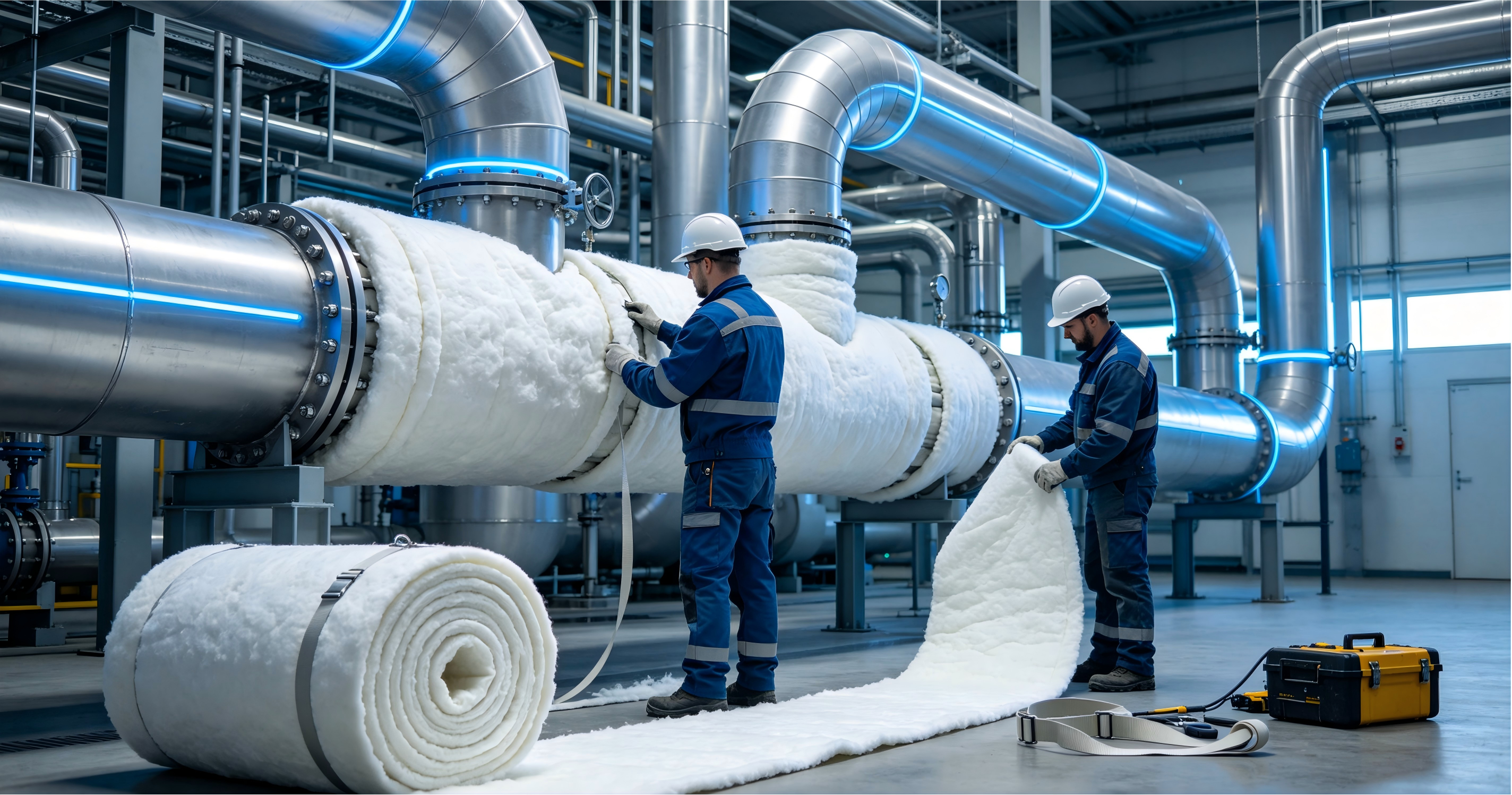
Insulation is usually purchased on price per square metre because that number is easy to obtain and easy to compare. It is also the smallest component of what the insulation actually costs you, which is why projects that optimise it frequently end up spending more.
What a material price comparison leaves out
- Labour, which on many industrial jobs exceeds the material cost
- Scaffolding and access, charged by duration, so a faster install directly reduces it
- Cladding, banding and fixings, which scale with finished outer diameter
- Support and hanger modifications where installed weight increases
- Programme cost when insulation sits on the critical path of a turnaround
- Energy loss across the asset life, which continues after everyone has forgotten the purchase price
- Maintenance, re-insulation and the cost of CUI-driven inspection
- Rework and waste, particularly on materials that break during handling
Where thickness quietly costs money
A thicker system means a larger finished outer diameter, which means more cladding area, longer bands, wider trenches on buried runs, and sometimes pipe rerouting. On congested sites, the thickness of the insulation can determine whether a project is feasible at all, which is a cost that never appears on a comparison spreadsheet.
A comparison that survives scrutiny
- Price the installed system, not the material: labour, cladding, fixings and access included
- Include programme cost explicitly where the work is on a critical path
- Model energy loss over a realistic asset life at realistic energy prices
- Include a maintenance and re-insulation cycle appropriate to the material and environment
- Include an expected value for CUI-related inspection and repair where relevant
- State every assumption, so a reviewer can challenge the assumption rather than the conclusion
The honest caveat
A total installed cost model can be built to produce whichever answer the person building it wants, and suppliers do exactly that. Build your own, or at minimum demand that every assumption in ours is stated explicitly so your engineers can challenge it. A supplier who will not expose their assumptions is not giving you an analysis, they are giving you a conclusion.