A cold service insulation system is really a vapour barrier with some insulation attached. Get the barrier right and a mediocre insulant will perform for decades. Get it wrong and the best insulant available will be destroyed, and you will not find out until the damage is extensive.
The mechanism
Warm humid air outside, cold surface inside. That vapour pressure difference drives water vapour inward continuously, every hour of every day, for the life of the plant. Any breach in the barrier lets vapour through. It condenses somewhere inside the insulation, and if the surface is cold enough it freezes. Ice expands, which opens the breach further. The process is self-accelerating and entirely hidden under the cladding.
Where breaches come from
- Field-applied barrier joints that were never sealed to specification
- Contraction joints, which are deliberate discontinuities and therefore deliberate weak points
- Pipe supports and hangers, where the barrier must be interrupted and reinstated
- Instrument penetrations, drains and vents
- Mechanical damage during construction that was clad over before anyone noticed
- Ageing of mastics and sealants, which is certain rather than possible
What reduces the risk
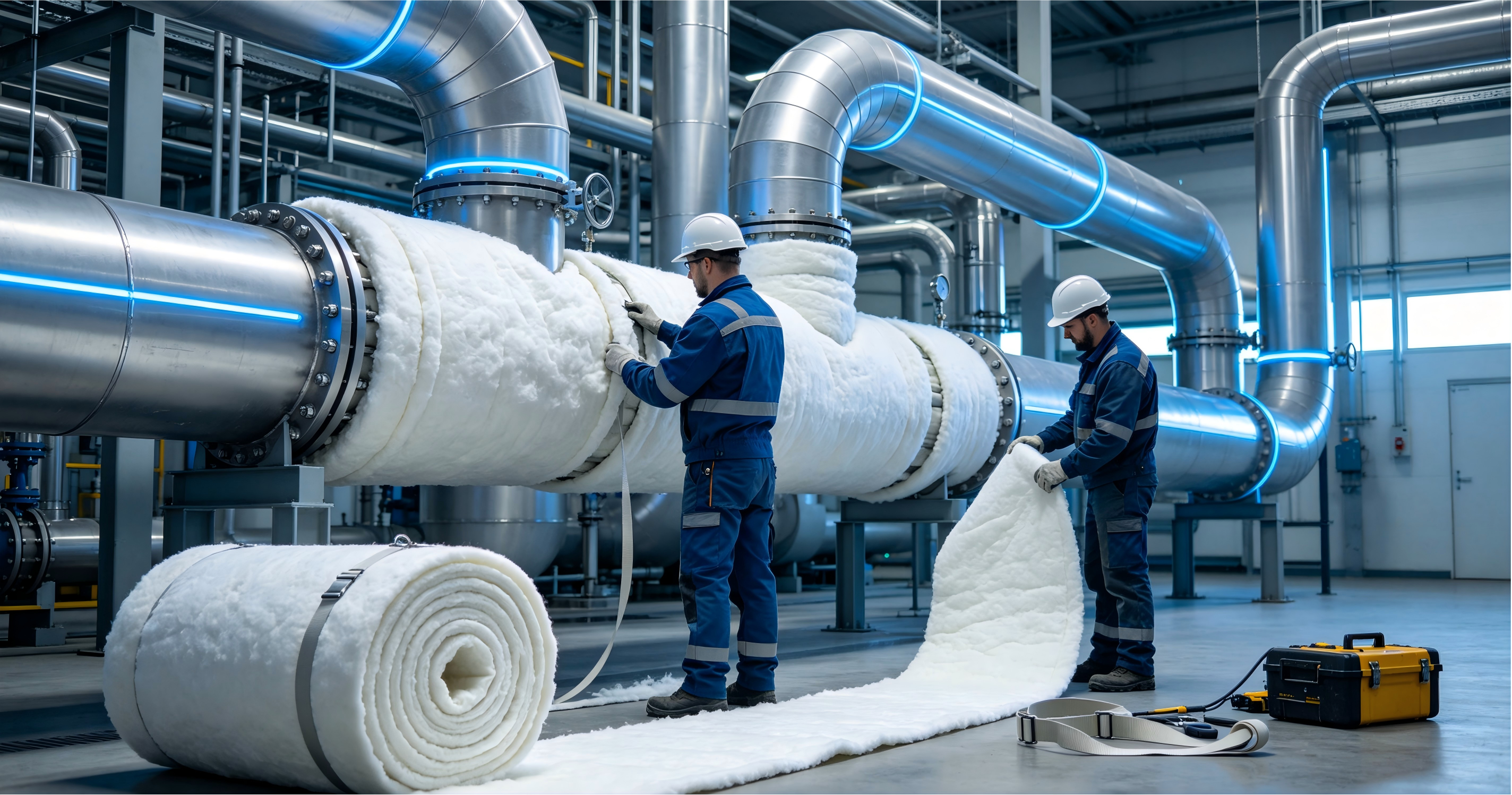
- Prefer a factory-applied integral barrier over a field-built one wherever possible
- Reduce the number of joints, because every joint is a candidate breach
- Eliminate contraction joints if the material allows it, rather than detailing them better
- Detail supports and penetrations explicitly on drawings, not as a site decision
- Use a hydrophobic insulant so that a breach stays local instead of travelling
- Inspect during construction, when defects are cheap to fix, not after commissioning
The uncomfortable conclusion
Most cold service failures trace back to workmanship on the barrier rather than to the insulation specification. If your site conditions or contractor experience make excellent field workmanship uncertain, choosing a system whose barrier does not depend on field workmanship is worth more than any improvement in the conductivity figure.