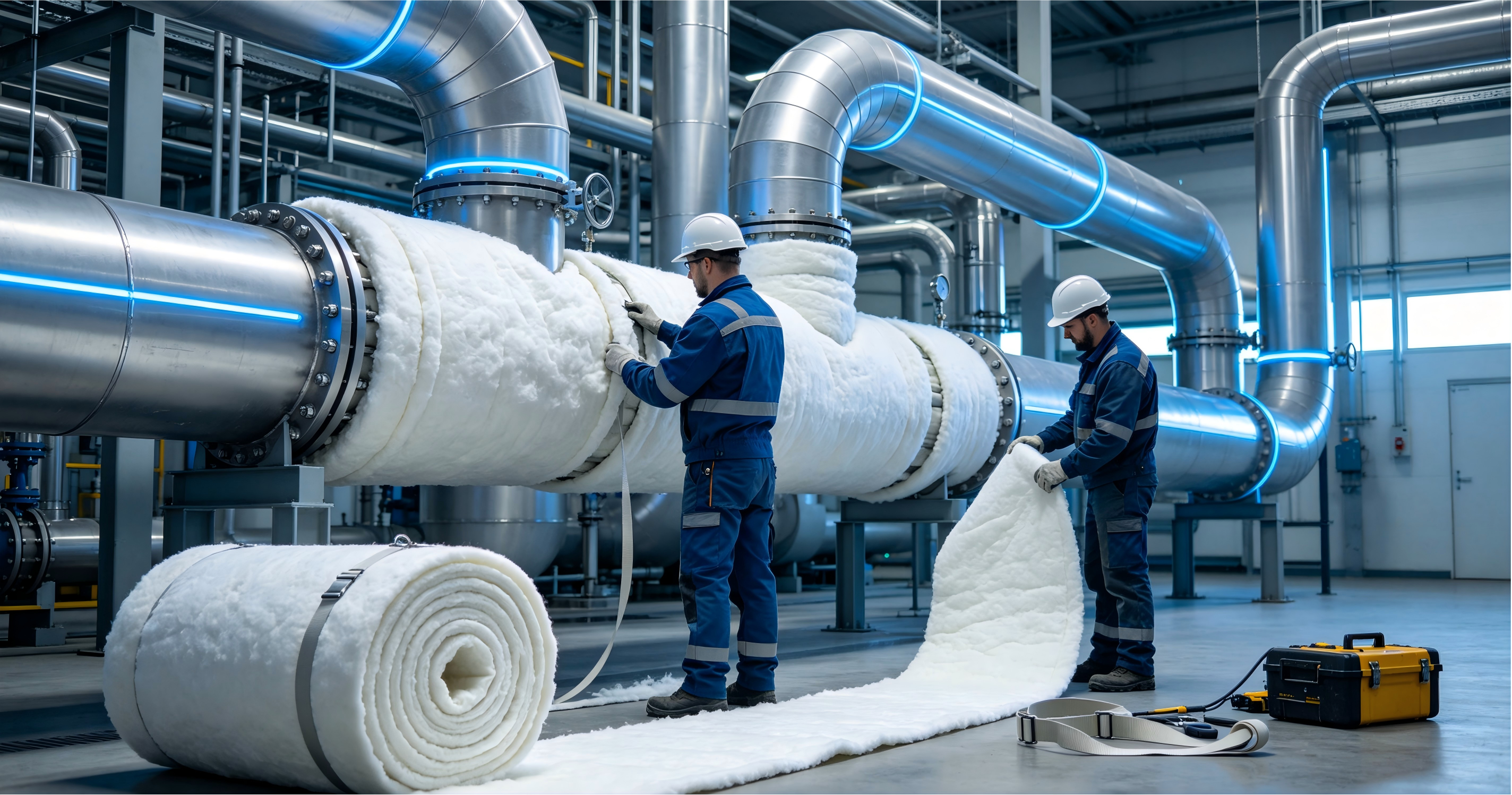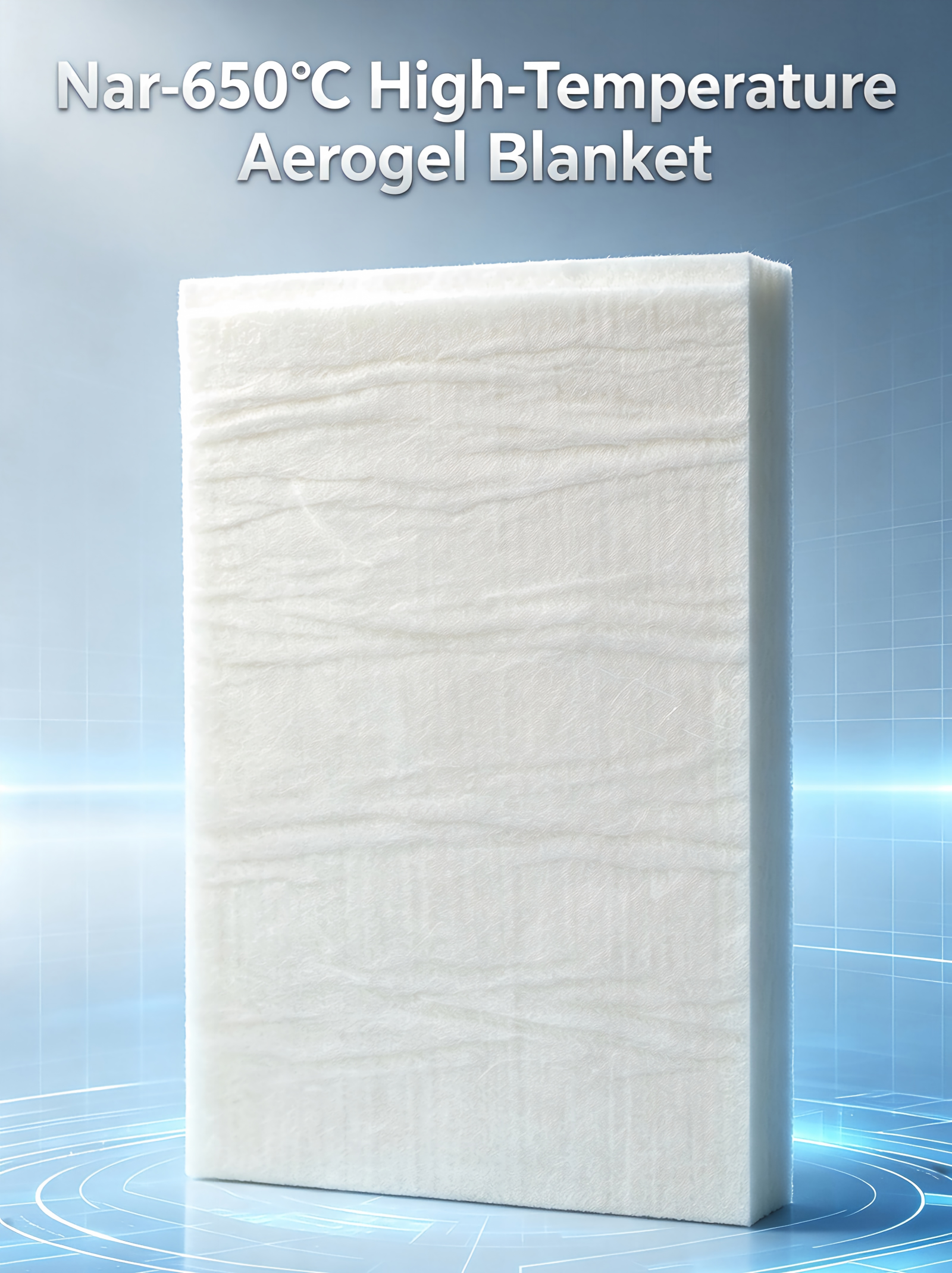
Aerogel is what you get when the liquid in a gel is removed without letting the solid network collapse. What remains is a solid that is mostly empty space, typically well over ninety percent air by volume, held together by a skeleton of silica strands only a few nanometres across.
Why the structure matters
Heat moves through an insulating material by three routes: conduction through the solid, conduction and convection through the gas in the pores, and radiation. Conventional insulation attacks the first two by trapping air in small pockets. Aerogel goes further on both counts. The solid skeleton is so sparse that there is very little material to conduct through, and the pores are smaller than the mean free path of air molecules, which means gas molecules collide with pore walls more often than with each other. That suppresses gas phase conduction in a way that simply making bubbles smaller cannot.
What the numbers mean in practice
Still air has a thermal conductivity of about 0.026 W/m K, and for a long time that was treated as a floor for practical insulation. Silica aerogel products sit below it, typically around 0.018 to 0.023 W/m K at room temperature. Roughly speaking that is two to three times better than mineral wool, which is why the same performance arrives in a third of the thickness.
Where the claims outrun the engineering
- Laboratory monolithic aerogel figures are not what a commercial blanket delivers. The fibre reinforcement that makes it usable also adds conduction paths
- Conductivity rises with temperature, sometimes steeply. A single room temperature figure tells you very little about a 500 C application
- Aerogel is not a structural material. Composites hold shape; the aerogel itself does not
- Cost per square metre is high. Aerogel wins on total installed cost in specific situations, not universally
When it is the right answer
The honest summary is that aerogel is the right choice when thickness, weight or water carries a cost that does not show up in a material price comparison. If you have unlimited space, a dry environment and no weight constraint, conventional insulation is probably the better commercial decision, and any supplier who tells you otherwise is selling rather than advising.